Six myths about package holidays

By Julia Brookes

Forget the 1970s stereotypes — package holidays deliver all sorts of experience, from fly-and-flop to stirring adventure. Here’s what you need to know

Sales of package holidays are soaring in 2023 thanks to the cost-of-living crisis and post-pandemic anxiety about securing a refund if things go wrong. 

Over 80 per cent of 2,000 people polled by the UK’s largest tour operator, Jet2, said they were now considering a package because of the current economic climate. Jet2’s summer 2023 programme will be the biggest ever — it has just added flights to Lanzarote, Fuerteventura, Larnaca, Majorca, Tenerife, Faro and Malaga. 

Meanwhile, travel trade association Abta has revealed that 29 per cent of Brits are planning on taking an all-inclusive holiday this year to keep costs under control. 

Still think this style of trip is just not for you? Here are eight popular myths about package holidays that you shouldn’t believe.

A mural in Buenos Aires, Argentina
A mural in Buenos Aires, Argentina (Alamy)

1. Package holidays involve two weeks in Spain, eating at the same restaurant every night 

Forget that 1970s fly-and-flop stereotype: packages come in all shapes and sizes. Any type of trip, from trekking through Bhutan to exploring the vineyards of California’s Napa Valley on horseback can be a package holiday. The definition of a package is simply that a travel company has put at least two elements of your trip together for you, such as flights, accommodation and car hire. Check out Aito, a brilliant site for sourcing every style of holiday, in destinations from Argentina to the Azores, offered by independent and specialist travel companies.

The view from Manhattan Bridge on New York's Chinatown
The view from Manhattan Bridge of New York’s Chinatown (Getty Images)

2. Packages are more expensive than booking hotels and flights separately

Not necessarily. You may think you’re getting better value for money by going it alone but for traditional seaside summer holidays in destinations such as Greece and Portugal package holidays will generally be cheaper than DIY trips, and you won’t run the risk of losing your holiday if your airline or hotel goes bust.

Even city breaks can be cheaper when booked as a package: BA Holidays has some great hotel and flight deals especially off season. Short-haul trips tend to offer fairly modest savings, but long-haul deals can be incredible bargains if you strike lucky: a three-night trip to New York from Gatwick, staying at the plush Indigo Hotel on the Lower East Side in mid-March was £565pp if two people are sharing a room, saving an astonishing £2,275 on the cost when booked separately.

Dining out at Oliva Restaurant, Ikos Aria, Kefalos, Greece
Dining out at Oliva Restaurant, Ikos Aria, Kefalos, Greece (Ikos Resorts)

3. All-inclusive holidays are all wristbands, cheap booze and dodgy food

All-inclusive holidays have always been a brilliant way of keeping spending under control and according to Abta, 40 per cent among those aged 44 and under and 57 per cent of young families are planning to take one in 2023 to manage their finances.

All-inclusives cover all price points and if the cheap and cheerful doesn’t appeal, a new breed of high-end all-inclusive has redefined the experience. Five-star Ikos Resorts (with resorts in Greece and Spain) offers the “Infinite Lifestyle concept”, including restaurants with Michelin-starred menus, cocktails designed by top mixologists, 24-hour complimentary room service, kids’ clubs and a dine-out option that means that guests can try local restaurants. Book through tour operators such as Jet2Holidays.comtrailfinders.com and britishairways.com.

4. It’s quicker and easier to book everything myself

The internet can be a wonderful resource but planning a complicated trip online will be time-consuming and can be stressful and confusing. Book through the right travel agent or tour operator and their staff will be on top of the logistics; they’ll have been on the excursions, stayed in the hotels, eaten in the restaurants and know the right time of year to travel, so you shouldn’t get any nasty surprises.

The Mohammad Al-Amin Mosque in Beirut, Lebanon
The Mohammad Al-Amin Mosque in Beirut (Getty Images)

5. An escorted tour means endless coach travel and a big group wearing name badges

Small group escorted tours have soared in popularity in recent years, partly because they’re a brilliant option for solo travellers. They’re led by expert guides (whose services would cost a fortune if booked privately) and often include packed itineraries and experiences that would be impossible to arrange privately, in off-the-beaten track destinations that can be daunting to navigate for newbies. Group sizes are often no more than 12. 

Explore! for example, whose average group size is 11, has a week-long Highlights of Lebanon tour including crusader castles and Phoenician ruins, and a sobering reminder of the civil war on a walking tour of Beirut. Some operators offer different grades of comfort and pace: Intrepid, whose new trips for 2023 range from communing with penguins in Patagonia to hiking and biking through Morocco, has four, ranging from “Basix” itineraries for those on a budget to “Premium”, with top-notch accommodation, many meals and tips included.

The Danube cycle path
On the Danube cycle path (Alamy)

6. Packages are a one-size-fits-all trip

Many tour operators offer tailor-made trips so that you can explore at your own pace, stay in exactly the sort of hotel that suits you and eat when and where you want. Exodus, for example, has a self-guided seven-night cycling holiday starting in Vienna that meanders along the Danube and includes cycling in three countries in one week, with stays in four-star hotels, luggage transfers and flights from £1,299pp. Tailor-made trips can also include insider access: try Abercrombie and Kent, whose little black book of contacts will get you an exclusive pre-opening tour of the Grand Egyptian Museum in Cairo if you book a wider itinerary.

What every traveller needs: an eSIM card

Have you ever received a huge roaming bill after a trip abroad? Have you ever lost phone service or connectivity while traveling – and found yourself desperately searching for free Wi-Fi? Have you wasted time anxiously looking for a SIM vendor at the airport? We experienced all of these things, this is why we created Airalo

The eSIM Solution

Airalo is the world’s first eSIM store that solves the pain of high roaming bills by giving you access to eSIMs (digital SIM cards). With eSIMs from Airalo, download and install a digital data pack from 200+ countries/regions and be connected anywhere in the world the second you land.

6 highlights of the Azores

1. Furnas

A dramatically active volcano lies next to this scenic little town and gardens where you can swim in hot, mineral-rich water that bubbles up from deep within the earth.

2. Sete Cidades

A spectacular caldera and a pair of hauntingly beautiful crater lakes that are entangled with local myths and legends. Ethereal and mystical, the area makes for some of the best hiking on the islands.

3. Capelinhos

This wild headland only reared out of the sea split-seconds ago in geological time, though it first emerged in 1957. An enthralling museum is found within the lighthouse, which is still half-buried under volcanic ash.

4. Whale and dolphin watching

Wildlife-watching trips can be arranged from various ports, including Horta (Faial) where a museum brings to life the history of humans and whales.

5. Angra do Heroísmo

This UNESCO World Heritage city is steeped in history and packed with reminders of Portugal’s old empire and age of exploration.

6. Azores Geopark

A site protected for geological research. At its heart is the Algar do Carvão volcanic cone and lava tube.

Where to stay in the Azores

Grand Hotel Açores Atlântico, São Miguel

This local landmark sits on Ponta Delgada waterfront. It has great views over the harbour and some of the finest dining on the island at Balcony restaurant

Hotel do Canal, Faial,

This is a maritime-themed four-star hotel is by the Horta marina. It has legendary status in Faial’s seafaring history and was once an overnight stop for passengers on the Star Clipper flying boat between Lisbon and New York.

Terceira Mar Hotel, Terceira

This is a four-star stay set in luxuriant gardens by the sea and in full view of the Monte Brasil fortress. It is only a short walk to the historic centre of Angra do Heroísmo

Top things to do in London

Here are 6 reasons why everyone needs to go to London at least once:

1. The famous sights

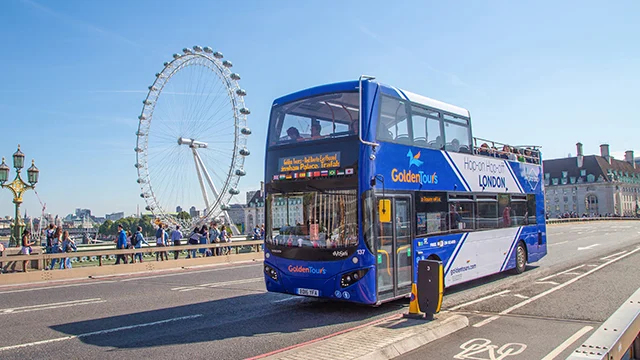
Big Ben, the Tower of London, Buckingham Palace, the London Eye, the list goes on and on. There’s nothing quite like the experience of hopping on a red double-decker bus and seeing some of the most recognisable sights in the world from its top deck.

2. The shopping

Whether you’ve got money burning a hole in your pocket or you just want to have a nose past some windows, there is no better place to experience the best shopping in the world than London. Get overwhelmed by the number of people on Oxford Street, stunned by the prices in Knightsbridge and charmed by the boutiques around Carnaby Street.

3. The nightlife

Londoners may work hard, but they also play hard too. There’s everything any night owl could possibly want in the capital, from classic pubs, to chic clubs, quirky dive bars, theatres packed with Hollywood stars taking their turn on the boards. Whatever you decide to do, make sure you book tickets for some kind of show one evening, whether it be a West End musical, a stand up comedy show, or a great live concert. The biggest stars and the best shows always make a stop in our nation’s capital, so you’re sure to find something that will blow you away.

4. The history

The story of London is ever so long and dramatic. So much of our culture as a country developed in this city and you’ll discover more than you can possibly remember if you visit some of its museums and historical attractions. Terrify yourself with the gruesome past of the London Dungeons or bask in the splendour of royalty at Hampton Court Palace.

5. The unexpected bits

The best bits of a trip to London will be the bits you won’t expect. There are some things you’d never know until you experience them in person, like how peaceful the green spaces in such a bustling city can be, or how distinctive different neighbourhoods can feel. The one-of-a-kind memories can only come from travelling to the city, putting on some comfortable walking shoes, and going out to explore.

6. The people

London, and in fact Britain in general, may not have a great reputation for being full of friendly, welcoming people, but actually, the city is the wonder that it is because of the great diversity of fascinating people that live there. Everywhere you look you’ll see people doing incredible things, whether it’s building businesses or performing circus acts in the street. Everyone has a story to tell, and on a visit to London it’s worth talking to as many people as possible to hear some of the amazing stories, as well as creating one of your very own.

Check out the amazing range of tours available here

The coolest hotels in the Canaries

by Isabella Noble

From Lanzarote’s art vibes to Tenerife’s food scene, the islands are all grown up, with even the most remote offering stylish places to stay

Alava Suites, Lanzarote

When I’m dreaming of a trip to the sunny Canaries it involves swims in glinting Atlantic pools, hikes into silent palm-filled valleys, a healthy dose of the local art scene, perhaps a splash of beach yoga and somewhere irresistibly chic to stay.

In recent years, Spain’s oft-maligned Canary Islands have quietly grown up and morphed into a stylish, creative, upmarket destination. Old mansions and fincas (country estates) are being reborn as seductive boutique hotels, while interesting apartments and villas led by energetic owners with a zest for celebrating the islands’ cultural heritage are popping up. Luxurious beachfront five-star hotels are having design-forward makeovers, and even hidden cave-houses are being transformed into boho-chic holiday homes.

AVANTI Lifestyle Hotel

On the foodie side of things Michelin stars continue to arrive, particularly in Tenerife, which is home to five of the archipelago’s nine Michelin-starred restaurants. You’ll taste this culinary boom in a raft of other wonderfully imaginative kitchens too, while traditional spots continue to highlight the islands’ fabulous fresh produce, just as they have done for years. Until recently Canarian wines were little known beyond their homeland, but they are now truly blossoming.

Ecohotel El Agua


When it comes to choosing which island to visit, it’s worth noting that different islands address different needs, and all have their own charms. Dynamic Tenerife and Gran Canaria are the grand dames, offering a wide range of activities. Fuerteventura pulls in beachy types with its silken sands, surf scene and strong gusts for wind and kitesurfing. Lanzarote is on the map for art and design lovers thanks to its wave of creative boutique hotels, as well as the venues, gardens and homes (open as tourist attractions) created by the 20th-century environmentalist and artist César Manrique. On all four larger islands, the north has a wilder, less touristy feel.

La Colonial Suites Apartamentos de Lujo

Then there are the three smaller and more remote Canaries — El Hierro, La Gomera and La Palma, linked to the bigger islands via ferry or tiny airports. All have their own beauty and make for glorious crowd-free escapes.

Whichever island you pick, rewarding hiking awaits, from misty laurel forests found on several of the islands, to the challenge of the 3,718m summit of Mount Teide on Tenerife. Or perhaps you fancy surfing, paddleboarding, diving, kitesurfing or whale-watching. Maybe pottering around the farmers’ markets is more your thing. Wherever you go there’ll be a plate of queso a la plancha (grilled local cheese) and a glass of volcanic wine waiting.

The main airports serving the Canary Islands from the UK are Fuerteventura, Gran Canaria, Lanzarote, La Palma and Tenerife North and South. Armas, Fred Olsen and Líneas Romero offer ferry routes between all the islands.

Currency in Thailand, Cambodia and Vietnam

Thailand’s currency is the baht, and at the time of writing the exchange rate for ease of calculations is approximately 35 baht to the US dollar. I didn’t take any baht with me to Thailand as I had pre-booked and paid for transport from the airport and our hotel, Trang hotel, takes card payment for meals. The local street vendors seem to take dollars for everything and the ubiquitous 7-eleven stores will take dollars and give change in baht. I did take plenty of US dollars in cash and was able to change it at one of the many currency exchange booths and banks in Bangkok, there are also plenty of ATMs there. Bahts are useful when paying for entrance fees to temples and boat trips.

The local currency in Cambodia is the riel, but here dollars are accepted everywhere and there is no need to change currency or get riel from an ATM. Change may be given in dollars with smaller amounts in riel. Most restaurants and shops do not take card payments. At the time of writing the approximate exchange rate was 4000 riel to one dollar.

In Vietnam it is easy to be a millionaire in Vietnamese dong as there are over 24,000 dong to the dollar. Fortunately most notes are in multiples of 1000 and even a 50,000 dong note is only worth just over 2 dollars. Some restaurants and bars leave the zeros off their prices so that 50,000 dong would be 50. Here again the dollar is widely accepted and change may be given in dollars and dong, there are plenty of currency booths and ATMs available. Card payments are more widely accepted here than in Cambodia.

Explore Grand Canyon National Park

Explore Grand Canyon National Park

About Grand Canyon National Park

Vast and cinematic, this famed national park is an absolute showstopper, with bands of red rocks and carved canyon walls as far as the eye can see. No wonder it draws millions of visitors every year. But if you want solo time in nature, you’re in luck. The window of December to February gets only a sliver of summer’s peak crowds. Yes, it’s cold—highs tend to hover around 45 degrees—but this season has its own attractions, like seeing the Canyon’s walls dusted in snow. South Rim trails also stay open for the most part. One good bet: The Hermit Trail tends to stay relatively snow- and ice-free because of its lower elevation and sunlight exposure. Need another reason to come? January is also when the park’s historic photo studio, Kolb Studio, has its art exhibition and sale.

Fiji

If you’ve got to choose just one place, it may as well be paradise, right? But it’s the locals that really make Fiji, excelling themselves at being friendly. Plus, it can be pretty cheap once you get there, and the sun is usually shining. Sounds awful…

From the moment you arrive in Fiji, you’re made to feel at home. The traditional Fijian welcome song, Bula Maleya, is likely to welcome you everywhere you go, and you may find yourself invited to a traditional welcome ceremony. The ceremony centres around sharing the local drink, kava – just take it easy, it’s potent!

Having travelled so far, it might seem a shame not to live like island royalty and splash out on, say… a villa on a private island? There’s no need, though. Poolside studio apartments only 10 minutes’ walk from the beach go for as little as £29 per night on the main island. A bit more seclusion comes even cheaper, with cottages by the ocean on stunning Matacawalevu Island starting at £26 per night.

Hostelling and home stays cost next to nothing, and then you have the added bonus that your hosts might also offer you home-cooked meals. As a general rule, it’s cheapest to eat in larger towns as opposed to resort areas. What you might not have guessed is that the local catch of the day might catch you off guard when you get the bill, while eating at an Indian restaurant can set you back less than £5.

Every little helps when you’ve got to save those pennies for a sunset coconut and local rum…

Pyramids in Brazil

Pyramid in Brazil

Pre-dating even the pyramids in Egypt, Brazil’s pyramids are considered the oldest in the world, having been built around 3,000 BCE. These ones are a lot more mysterious than their African counterparts, though, with no written records of their construction in existence.

The pyramid near Jaguaruna in Santa Catarina State is one of the last remaining in Brazil. It stands 100 ft tall (though researchers think it may have once been much taller) and has a base covering an impressive 25 acres. However, archaeologists reckon there were once thousands of pyramids built along the Atlantic coast of southern Brazil.

And why along the coast? Well, that’s because these pyramids were made using only seashells. As a result, many have been mistaken for rubbish heaps over the years and destroyed to make way for development.

Brazil’s pyramids were built over the course of decades, or even centuries, and appear to have been used for burials and other religious purposes, just like the ones found in Egypt. However, more like the pyramids found in other parts of the Americas, structures were built on top of them.

Montana

The town of West Yellowstone just over state lines is a great base for National Park adventures. Plus, it’s the only place you’d actually want to run into a grizzly bear. When it comes to Montana’s big moments in history, The Battle of the Little Bighorn might sound familiar, aka Custer’s Last Stand (not Custard, as some of us may have thought as children). Today you can visit a monument to the battle near Crow Agency, Montana, taking in the beautiful sculptures and gravestones dedicated to the men and women who died there.

The Crow fair is another important stop during August, when the hills surrounding the Little Bighorn River are turned into the “teepee capital of the world.” Members of the public are welcome to witness the parades, rodeos and dance competitions celebrating tribe culture. Ya·qawiswit̓xuki—or Glacier National Park as it’s known in English—is your next stop. It was formerly a homeland of the Kootenai people, but years of development and global warming have changed the landscape greatly. Visiting is allowed, just take time to be respectful of the land and learn about the local history before you go. The glaciers are receding more each year, but a day hike in Many Glacier Valley can still provide you epic views of Grinnell Glacier and Salamander Glacier. If you’re pushed for time, plan ahead for a drive along the infamous Going-To-The-Sun Road and keep your eyes peeled for the Jackson Glacier Overlook sign. Bring binoculars for the big reveal!
The Kootenai and Salish Tribes are also responsible for something wholly unexpected in the area—The Garden of One Thousand Buddhas. You’ll be transported straight to Tibet, surrounded by colourful prayer flags, a shrine to Yum Chenmo, and—as you may have guessed—one thousand statues of Buddha