Zion National Park

By Olivia from Jack’s flight club

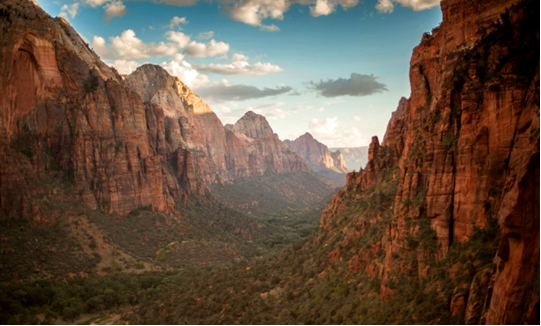
Zion is the 3rd most visited National Park in the US, but only the 36th largest, and most of that land is wilderness that tourists can’t easily access. The main canyon area is a patch of lush, overgrown oasis between soaring tall peaks of red rock, surrounded by desert. This combination of tight space and popularity means that this skinny strip of Eden is pretty bogged down by crowds.

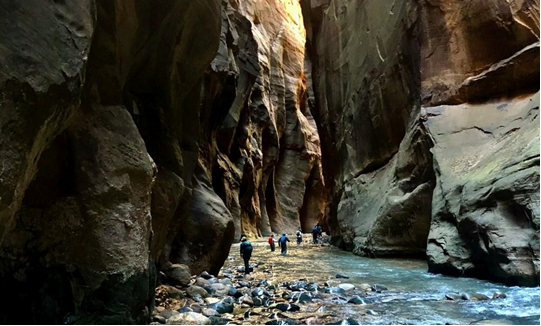
But if you want to get away from the noise, there’s an option — trek deeper down the Virgin River to where Zion Canyon narrows into a slot, aptly named “the Narrows.” While still considered a popular hike, the deep, ice-cold water and miles of boulders are enough to scare off the bulk of the tourist crowd. A couple miles in, and you might feel like you have the park nearly to yourself.

Here’s what is is actually like to hike the Narrows. if you are not accustomed to this sort of thing it can be a pretty difficult journey.

You won’t make it very far into the canyon without gear, so unless you already own the tools for river hiking, your first stop will be the rental shop. The most popular rental shop seems to be Zion Outfitter, since they’re right by the park entrance. I instead went with Zion Adventures (a few minutes from the entrance in the town of Springdale) for the more flexible pick-up time. This worked out nicely, because without the giant crowd that always surrounds the more popular shop, I was able to talk to the employees and work out my route.

They provided me with a walking stick, neoprene socks, water shoes, and dry pants with a bib. All of these items are 100% necessary if you want to make it in and out of the canyon without tripping, freezing, drowning, or generally having a miserable time. It was $60 for a day rental, which is around average compared to other shops.

Next you must find your way to the Temple of Sinawava. While the name sounds grand, it’s really just the end of the drivable path through the canyon. It’s around here where the canyon begins to narrow and the smooth rock walls close in tighter. The sandy riverbanks start to shrink and eventually disappear, until the only path through the canyon is the river itself. Get to this spot, and you can begin your adventure.

The scenic drive out to the Temple is only accessible via park shuttle for most of the year. I parked at the history museum, so I had to shuttle back to the visitor’s center, get off, wait in line, and then shuttle all the way to the Temple. From my arrival in Springdale to my arrival at the trailhead, two hours had gone by.

When you get off the shuttle at the Temple, you won’t see much. Just more trees and another view of the creek. But continue down the paved path called the Riverwalk, and you’ll find the edge of the water. The canyon walls that seem distant in the rest of the park start to form a passageway—this is the mouth of the Narrows. It’s also your cue to get wet.

The first few steps in the river feel strange as the water soaks into your neoprene socks. It’s chilly in the canyon, with your legs in icy water and minimal sunlight reaching your head. The temperature seems to drop dozens of degrees almost immediately. It feels less like starting a hike and more like entering some sort of massive and drafty stone building.

Soon, the trail weeds out those who aren’t prepared – right before Mystery Falls, a trickle that splays out over the right-hand cliff. This is where the water is deepest, and the reason why dry packs are recommended. The river here came up to my chest.

While the earlier part of the trail was alive with chit-chat, everyone in this section was silent and focused, fighting the current and trying not to trip. This bit only lasted about 25 yards. From here the path was much easier, and the water never reached my waist again.

The further you go, the more the crowd thins out, and the more you feel like you’re in an alien landscape. The cliffs gradually become higher and narrower, and you have to look straight up to see the tops of them. In some spots, the river was clean enough to look crystal blue. In others, it takes on the trademark Utah redness. Maidenhair ferns peek out from rocks and feed on the drippy dampness at the bottom of the canyon.

After about two hours, I decided to head back to the entrance, I’d heard that the return trip was faster because you’re going with the current instead of against, and that was my experience too. It only took about an hour and fifteen minutes to get back.

It felt lightning fast, like a blink. Stepping back onto dry land and out of the damp corridor feels like crash-landing back on Earth.

Recommended top activities

Cruising through the Panama canal

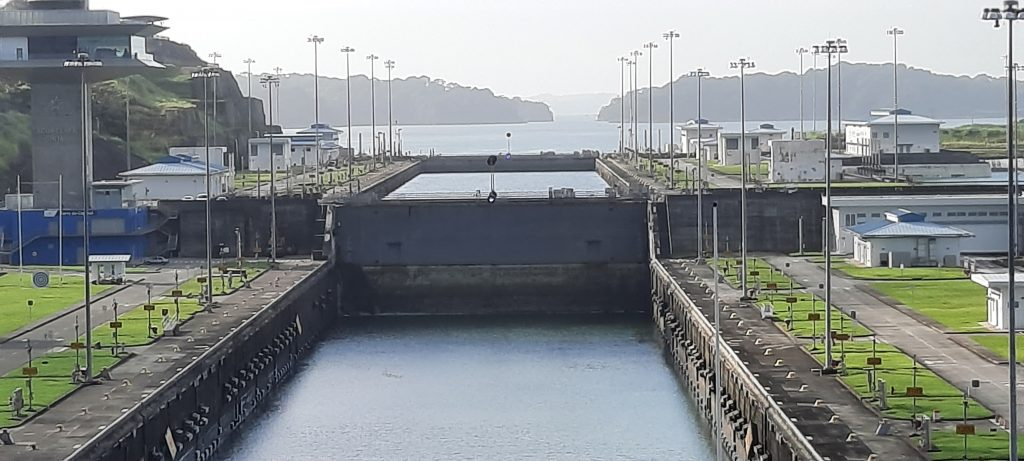
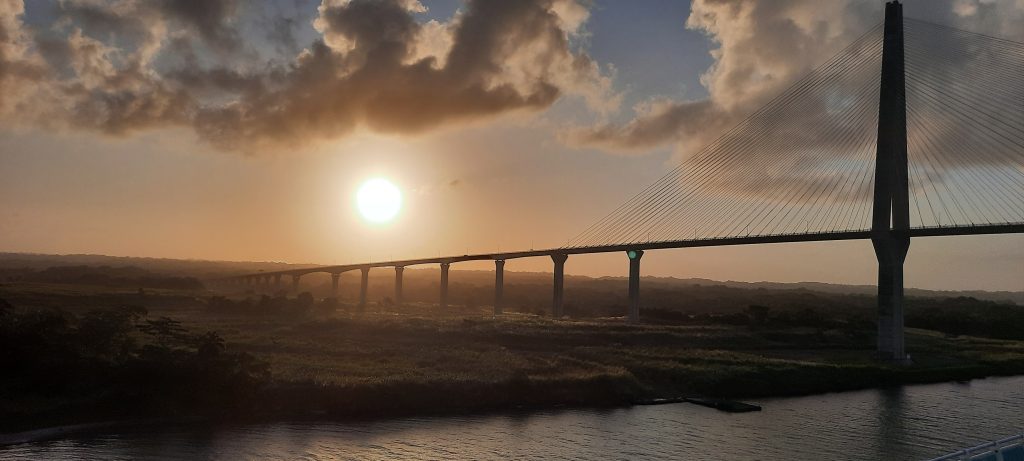
Although the original Panama canal was completed in 1914, in 2016 the expansion project was completed. This added 2 new sets of locks, one each on the Atlantic and Pacific sides which doubled the canal’s capacity and allows larger vessels to pass. The ship I was on would not have been able to get through the original locks but we were able to transit the new Agua Clara 3-step locks. At dawn we cruised under the new Atlantic bridge which was built in 2019 to make a 3rd crossing over the canal.

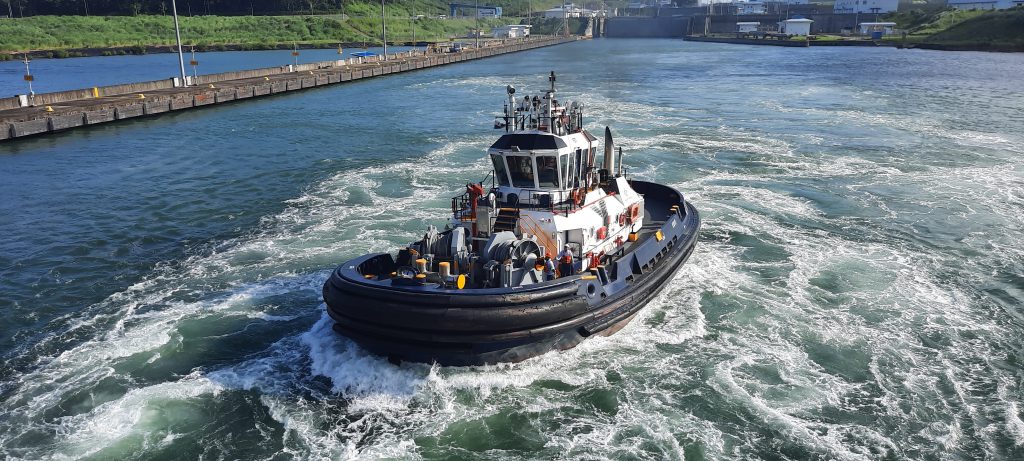
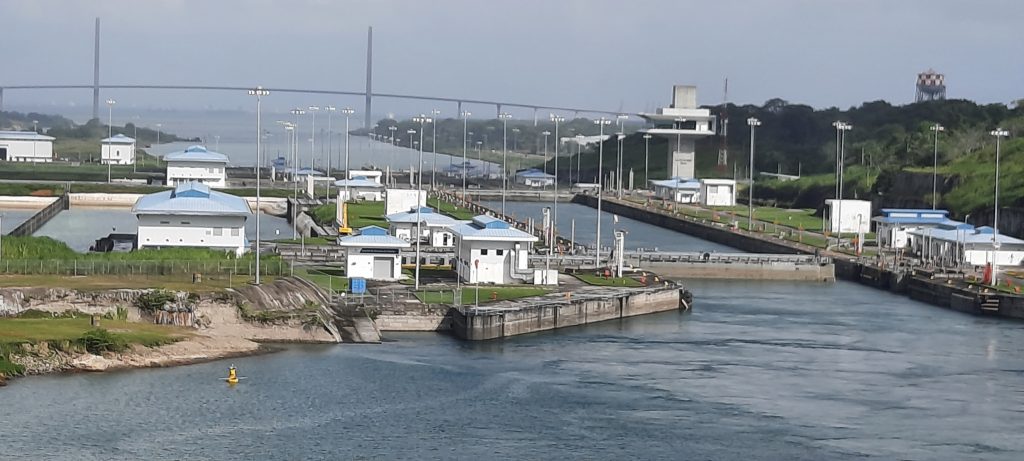
Shortly after the bridge the canal separates, the new canal to the left and the old one to the right. Approaching the locks we are greeted by 2 tug boats to guide us through, one in front and one behind. A pilot also needs to come aboard our cruise ship to navigate us through the 3 new locks. This takes about 2 hours until we pass the visitor observation point and enter the Gatun lake.

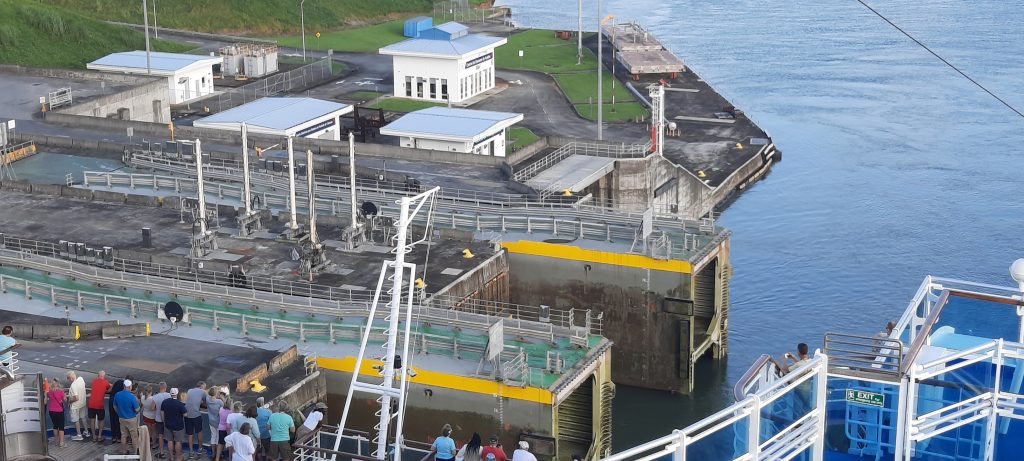
The new locks are built with sliding gates and each lock has 3 water saving basins to reduce the volume of water that is needed from lake Gatun for lock operation. The operation of the new locks uses gravity and valves. There is no pumping involved. It was an amazing experience to watch the opening and closing of the gates.

Our cruise was staying on the Atlantic (north) side of the canal which meant that we were only going as far as Gatun lake before turning to go back through the same 3 locks. Once we had passed through the 3rd lock into Gatun lake, we stayed there for about another 2 hours while some of the passengers left the ship in tenders to go on various excursions.

The length of time in Gatun lake depends on how many other ships are coming through the canal as we needed to wait for them before going back through. Once back through the 3 locks we docked at Port Cristobel to collect the passengers who had been on excursions.

6 Stunning European Castles

What is it about castles that are so alluring to travelers? Aside from getting us one step closer to living out our fairytale fantasies, the staggering structures showcase some of the world’s best architecture and most stunning landscapes—and maybe even a ghost story or two.

There’s perhaps no better place on earth to find awe-inspiring castles than in Europe, where it seems like you can’t visit a city or take a road trip without stumbling upon some sort of royal residence. Here you’ll find medieval stone walls, sky-high towers, and bridges arching over glittering moats, everywhere from the Bavarian Alps to the Mediterranean coast

Pena Palace, Portugal

Inspired by German Romantic architecture, Pena Palace—situated on top of a hill in Sintra—looks like a Disney castle with its pink and yellow towers, ornamental buttresses, and cartoonish gargoyles. The interiors are equally dramatic. Don’t miss the intricately carved ceilings and walls of Queen Amelia’s apartments and the striking all-white reception room. (Bonus: Sintra is only 40 minutes from Lisbon, meaning you really have no excuse not to visit.)

Neuschwanstein Castle, Germany

Neuschwanstein Castle is not only one of the most beautiful castles in Europe, but it is also one of the most recognizable castles on the planet—thanks in large part to the fact that it served as inspiration for Disneyland’s Sleeping Beauty Castle. Originally built at the behest of reclusive King Ludwig II as a private retreat in 1886, the majestic structure boasts a clifftop location and ornate rooms; today, it attracts some 1.4 million visitors every year.

Guaita Tower, San Marino

San Marino may be tiny—under 24 square miles, and completely surrounded by Italy—but it still has some pretty impressive sites. The capital city is known for its three hilltop towers (you can even spot them on the country’s coat of arms), the prettiest of which is Guaita Tower. It was constructed atop Monte Titano in the 10th century, and it is now open year-round to visitors.

Alcázar of Segovia, Spain

The Alcázar de Segovia was once a medieval fortress, but it was rebuilt in its current, castle-like style following a fire in 1862. Today, visitors can explore its museum, multiple halls and secret passageways, and towers overlooking Segovia’s town square. Then, be prepared for some equally impressive interiors. They’re marked by stained glass windows, polished suits of armor, lavish dining and dancing halls, and so many canopied beds.

Hohenwerfen Fortress, Austria

Another medieval, mountaintop castle, Hohenwerfen Fortress is one of the most stunning sites in all of Austria—and that’s saying something. The 11th-century castle overlooks the scenic Salzach River Valley (about 35 miles south of Salzburg), offering Christmas markets and falconry demonstrations along with its daily tours.

Bled Castle, Slovenia

There’s a reason (well, many reasons) why Lake Bled is one of Slovenia’s most popular sites, featuring emerald waters, a church-dotted islet, views of the Julien Alps, and, of course, a Disney-like castle on a hill. Climb your way up the forest trail to see Bled Castle’s orange-roofed towers and 11th-century walls up close, then turn around to be afforded some of the most picture-perfect views of the lake you’ll ever find.

Best Day Trips From Vegas

Winner: Death Valley

The salt flats are probably what you picture when you think of Death Valley – and they are indeed a sight to behold. Badwater Basin stretches out into the valley as a great white plain and visitors are invited to wander across as they please.

The basin is where the literal hotspot broke the North American records for the lowest and driest place, as well as the world record for hottest at 56.7° C. Not only can you fry an egg on the pavement there, so many people did it that the park had to ask them to stop.

Then there are the dunes dotting the valley, the best being Mesquite Flats – so otherwordly you might think you’ve gotten woefully lost and ended up in the Sahara.

The park is about 150 miles from downtown Vegas and takes about two hours to drive there. You can break up the trip by stopping in the ghost town of Rhyolite

Runner-Up: Lake Mead

This is the classic day trip from Vegas. It’s only about 30 miles from the city centre, and in a seemingly endless dry desert, it’s a bit of an oasis.

It’s got every outdoor activity covered: hiking, swimming, camping, boating, you name it. What this region lacks in foliage, it makes up for in sheer space. You could easily spend a week here exploring every craggy peak and shore.

It also includes the Hoover Dam, where the scale of the structure is pretty impressive.

If you’re looking for a one-stop outdoor adventure without sitting in the car for hours, Lake Mead is your place.

Honorable Mention: Grand Canyon West

The Grand Canyon is one of those things that everyone should experience at least once in their life. It’s not just a “big hole in the ground”; it’s so massive that it’s hard to believe it’s real when you’re looking right at it.

If the main spots were more accessible from Vegas, this would easily win this category. It still deserves a mention because the West Rim is way, way closer than the more popular viewpoints (125 miles from Vegas versus 290) while also providing some pretty sweet canyon views.

The West Rim’s unique attraction is the Skywalk, a glass-floored lookout point allowing you to peer deep into the abyss of the canyon (and your soul).

Oktoberfest

Oktoberfest is a celebration of all things beer and Bavaria, its origins date back to 1810 and a royal wedding between Crown Prince Ludwig and Princess Therese of Saxe-Hildburghausen. The meadow in front of Munich’s city gates was named Theresienwiese in her honour, and it remains at the epicentre of all the Oktoberfest.

The Bavarian charm has spread far and wide, however, and most of us can enjoy a special Oktoberfest Mass or two without even hopping on a plane. But that’s no fun, really. So we say, why not mix it up a little and visit one of the world’s other great Oktoberfests instead?

Blumenau, Brazil
The (joint) second-largest Oktoberfest in the world is held in the Brazilian city of Blumenau. Having been founded in 1852 by German colonists, the city’s heritage is still clear to see in its architecture, restaurants and—you guessed it— beer. The area is frothing over with exceptional breweries, so you might need to work on your bar crawling stamina in advance.

Festivities at the 19-day event serve up everything you could hope for, with Lederhosen, beer tents, parades and live music all on offer. Plus, there’s an added splash of Samba to spice things up. But it can also get slightly surreal at points. Just know that you’re not imagining things if you spot a giant herring named Rollmops presiding over a herring-eating competition.

Blumenau will undoubtedly transport you right back to Munich, but no matter how much you like beer, you probably aren’t going all the way to Brazil just to drink a pint.

Right on its doorstep is the Spitzkopf Ecological Park, where you can sweat off the hangover with a hike along rainforest trails towards panoramic views, before a refreshing dip in a river or waterfall. Keep your eyes peeled for protected species, like the white-bearded antshrike, white-necked hawk, cougar and margay.

Kitchener-Waterloo, Canada
Also in the running for second place after Munich is the Kitchener-Waterloo Oktoberfest in Ontario, Canada. This is another area with deep German roots, having been settled by German Mennonite farming families from the early 1790s. In fact, until a referendum in 1916, Kitchener was actually called Berlin.

Known as the Twin Cities, Kitchener and Waterloo both take Oktoberfest seriously. What started out as a modest trial run in 1969 has become three weeks of partying, feasts, and family-friendly fun across the two cities.

The official keg tapping is the ceremonial opening event, but it’s the Oktoberfest Thanksgiving Day Parade that really gets attention. The floats, marching bands and dancers make up the nation’s only Thanksgiving parade, drawing thousands come rain or shine.

Chicago Architecture River Cruise

Get views of Chicago’s most famous buildings, as well as insider info from an expert guide, on this architecture-focused cruise. See all the most important buildings on one tour, a hard-to-accomplish task on foot. View the skyline from the Chicago River while listening to live commentary. Snap photos of the Willis (Sears) Tower, Old Post Office, 360 Chicago Observation Deck, Wrigley Building, and more.

Highlights

from $50.36  per adult

Lowest price guarantee Reserve now & pay later Free cancellation

Duration: 1h 15m

Start time: Check availability

Best London Tours

Buckingham Palace tour

Take the unique opportunity to step inside Buckingham Palace each summer. Explore the palace’s usually private spaces, including the State Rooms, Throne Room and galleries filled with fine art on this self-guided tour.

prices from $87 Book now

 Hop-on, hop-off bus tour

See London from the top deck of an open-top double decker bus. The hop-on, hop-off bus tour ticket allows you explore London at your own pace, even at night, and you can enjoy added extras including free walking tours and a 24-hour Thames river pass.

prices from $45 Book now

London Explorer Pass including 2 to 7 Attractions

Save up to 25% on top London attractions with this hot Explorer Pass. Choose 2, 3, 4, 5, 6 or 7 attractions and tours from a list of 65+ attractions and see London’s best at your own pace.
Go City’s London Explorer Pass is a digital credits package which is loaded with credits, with each attraction being one credit. For example, 3 attractions = 3 credits, 7 attractions = 7 credits.
If you’re in London for a while, then don’t worry about time running out. Your pass will last for 60 days, with plenty of attractions to choose from across all of London. Tread the boards at Shakespeare’s Globe, admire the Gothic architecture at Westminster Abbey, and even enjoy the View from the Shard.

prices from $62 Book now

Japan in 2024

If you are thinking of visiting Japan in 2024 there are a couple of extra-special events in the calendar.

Our trip to the Sapporo Snow Festival returns, with departures in February ’24. Visit this fascinating festival to marvel at enormous snow and ice sculptures in the shape of cute characters, ice caves and architectural landmarks. Combine this with bullet train journeys through wintery landscapes and an ice-breaker cruise for a unique take on Japan – a great way to experience Japanese culture for the first time, or for an alternative view if you’ve already seen Japan in the warmer seasons.

Or, if springtime is more your season, did you know Japan is famous for its cherry blossom? In 2024 the blossom trail is expected to start from mid-March and run until early April. Join one of our bestselling Japan trips at this to be treated with a spectacle for the eyes, with landscapes blooming in pink and white as you explore this fascinating country.

How to Plan a Budget Trip to Europe

FREE WEBINAR: Learn the Secrets to Travelling Europe on a Budget!

Join Sarah Weingust (founder of HostelPass) for this entertaining (and free) webinar packed full of tips and tricks on how to make the most of your trip to Europe. Sarah will share everything she’s learnt from her years of travel and industry-experience to help you save more than you ever thought possible.

Considering Europe? This webinar isn’t just a recommendation – it’s a must-attend!