Five Underrated Summer City Breaks

Why not try a smaller, lesser-visited gem that typically serves as a gateway to resorts, beaches or wilderness and you’ll find you’ll get a brilliant urban break that can stand alone. Or – even better – it becomes the excuse for an extended holiday in both city and country.

Salerno, Italy
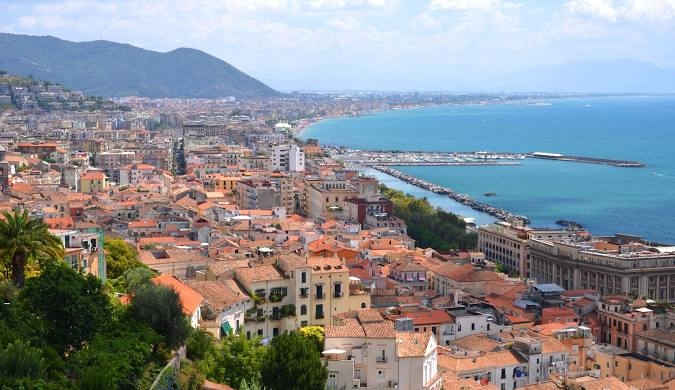
While this port city near Naples is typically used as the gateway to the world-famous Amalfi Coast, Salerno has plenty to warrant a weekend before you hit the road. Its small scale makes sightseeing a pleasure, not a chore; drift from the glorious cathedral – a blend of Byzantine, Romanesque and other architecture – to the serene Minerva botanical garden and epic Arechi Castle. When dusk descends, stroll the rambling seaside promenade, lined in palms and blooms, and grab an alfresco table to feast on freshly landed seafood and icy pours of locally made limoncello.

Funchal, Madeira
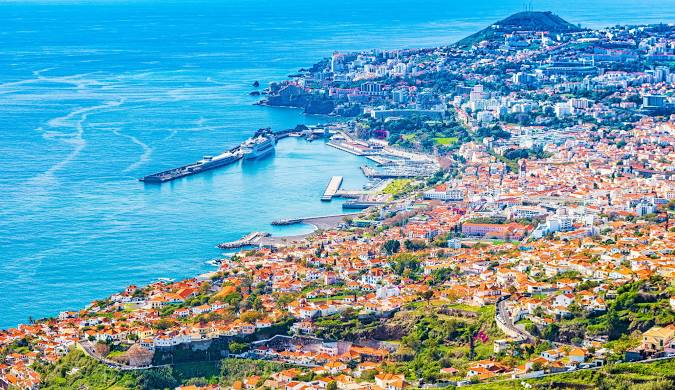
With a maze of streets zigzagging up remote Madeira’s rugged hills, Funchal has been shaped by its dramatic landscapes perhaps more than many mainland European capitals. Its downtown core has a Gothic cathedral and 16th-century fort, several museums and – of course – a historic Madeira fortified wine cellar, Blandy’s Wine Lodge. But in a city of slopes there’s perhaps no more unique city experience than the Monte Sledges, a traditional wicker toboggan ride down 2km of steep street, steered by two trained carreiros (drivers).

Larnaca, Cyprus
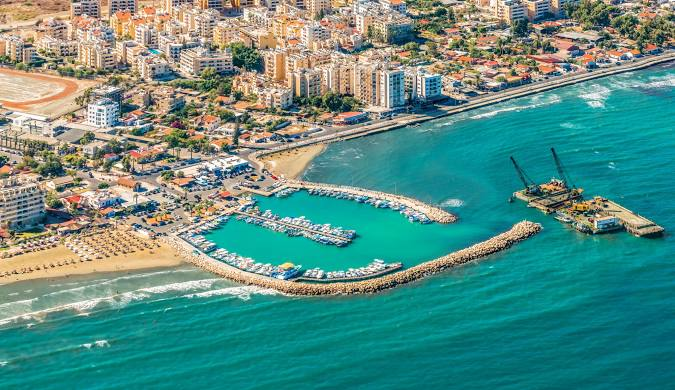
Most of Cyprus’s summer visitors make straight for the island’s beaches, zooming from the airport to a sandy resort. But Larnaca gives reason to linger, with its cute, compact old town centred on a mediaeval orthodox church and a revered mosque, Hala Sultan Tekke. Tuck into fresh salads, grilled meats and fried seafood at one of the waterside restaurants south of the historic fort, then slurp an ice cream while strolling the promenade, Finikoudes, to the city pier.

Heraklion, Crete
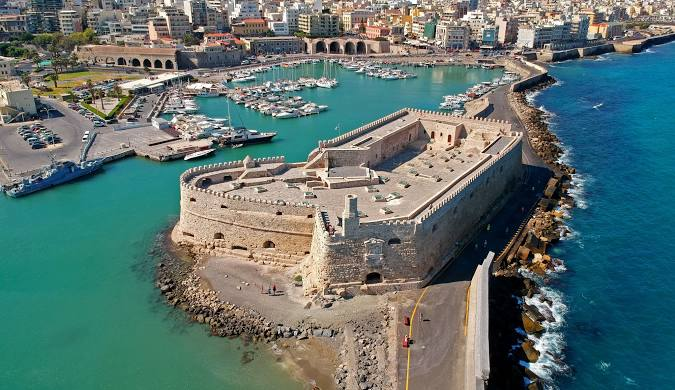
Given it’s thought to have been continuously inhabited for at least 9,000 years, you don’t have to go far in the capital of Crete to uncover something worth seeing. The epic ruins of the Palace of Knossos, mythical home of King Minos and his Minotaur, is unquestionably a highlight, but there’s plenty of other wowza architecture to catch too, from a grand Venetian-built Loggia to the Byzantine-constructed Saint Titus Church. Restaurants serving homely skioufichta pasta and snails (prepared every which way) will fuel your explorations.

Riga, Latvia
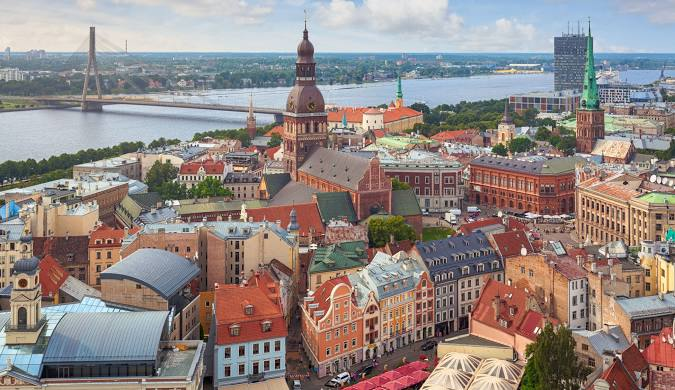
Latvia’s capital punches well above its weight in culture, making it a perfect summer break if you’re into museums and concert halls – and nature too, given numerous national parks are on its doorstep. The city’s core has made the Unesco World Heritage list thanks to its collection of fine Art Nouveau buildings. Walk the compact core, from the grand market to the decadent exterior of the House of the Black Heads, then crown off your day catching a performance at the Latvian National Opera and Ballet.

What went wrong with Booking.com?

How scammers successfully targeted guests of the world’s favourite place to book a hotel.

by Trevor Baker of Which

It took less than 15 minutes to list a holiday home on Booking.com. 

We didn’t need to provide proof of who we were. And, unlike if you put your house on Expedia’s Vrbo – or on Airbnb the last time we tried – there was no request to see a driving licence or passport. This speed and convenience for owners might be part of the reason that Booking.com is now a global behemoth, not just for hotel bookings but for small holiday lets, too, with more than a billion reservations each year. 

Unfortunately, it might also be one of the reasons why so many people have been defrauded on the site. 

In the summer of 2024 we searched Booking.com reviews for the word ‘scam’ and found hundreds of people from the past few months complaining that they’d paid for accommodation that didn’t exist. As part of that investigation, we sent 52 of these ‘scam’ listings to Booking.com. It removed most of them, but told us that most weren’t real scams – just owners who had neglected to switch off availability when accommodation had closed down or was temporarily shut. 

When we checked again, in November, we found exactly the same problem – 36 properties with hundreds of negative reviews pointing out that the accommodation was a scam. Angry guests we spoke to were incredulous at the idea that these weren’t really scams. They’d paid for accommodation, didn’t get to stay, and didn’t get their money back until we intervened. The idea that they hadn’t been ‘scammed’ seemed bizarre. 

If you contact Booking.com to complain you’ve been scammed, it will chase your money but it won’t necessarily refund you itself.

We warned in 2024 that Booking.com scams were among the most dangerously convincing we’d seen

Scam listings – live for months on Booking.com

To stop scammers, Booking.com told us that it restricts new hosts before they can accept payment bookings. It’s true that we weren’t able to accept prepayment for the listing we set up; we’d need to have some bookings and reviews first. But that’s not insurmountable for a scammer. 

Hiding bad reviews 

One obvious lesson is to always read the reviews, but Booking.com even made this much harder than it needs to be. Click on a holiday let in the centre of Podgorica, Montenegro, and you’d be reassured by the 6.4 rating, which Booking.com summarises as ‘pleasant’. The first two reviews you’re shown describe it as ‘superb’ (9/10) and ‘good’ (7/10). However, you’d need sharp eyes to notice that Booking.com is showing you reviews it has inexplicably decided are the ‘most relevant’. 

Switch your settings to look at ‘newest’ and you’ll see that 10 of the last 12 reviewers are furious. They describe it as a ‘con’, a ‘scam’ and ‘a nightmare’. (The other two, suspiciously, give it 10/10.) We highlighted the problem with ‘most relevant’ reviews in August, but Booking.com figuratively shrugged and said that people can always switch to ‘most recent’ if they want to. 

However, in December, following our pressure, it emailed its users to say that it was going to change its system to give recent reviews more prominence.

Dangerously convincing scams

Booking.com has tools that make life easier for anybody who wants to set up as a host. Unfortunately, they’ve also made life easier for scammers. If you’re a fraudster who wants to set up a listing on Booking.com, you don’t even need to speak English. Its algorithm will write a listing for you in terms, it says, that are ‘proven to attract guests’. It will then accurately translate it into 25 different languages. The fact that listings – both genuine and nefarious – could be written using the same Booking.com algorithms, rather than by owners personally, makes it hard to tell the difference between a genuine listing and a scam. It’s not the only way scammers have learnt to use Booking.com’s own tools against it.

When we investigated Airbnb frauds in 2017, we felt confident telling people they’d be safe as long as they only communicated inside Airbnb’s messaging systems. That isn’t the case with Booking.com. If its hotels and hosts have been hacked, it can be very difficult to know if the message you receive is genuinely from the hotel or a scammer. 

Another problem is that some users we spoke to were sent external links through Booking.com messages. This is despite Booking.com confirming that it can block links entirely if it wants to. It only does this if it’s already seen signs of suspicious activity, but it would be better if it simply banned all external links unless it’s clear that they’re harmless.

Booking.com’s failure to block malicious links, remove ‘scam’ listings and – until recently – mandate two-factor authentication for hosts suggests a carelessness towards users’ security. And its decision to show the supposedly ‘most relevant’ reviews instead of ‘most recent’ was bizarre. Booking.com told us that if it’s alerted to issues with listings, it investigates immediately, removing them if necessary. It said it’s using new technology to identify suspicious behaviour and block malicious links. There’s also a cybersecurity hub, with advice for hosts and guests. We accept that it’s safer than it was last year. But in our view it’s been too slow to spot how easily its tools have been adapted by scammers to steal money. When things do go wrong, it’s been far too slow to refund customers. It still needs to make it much harder for its platform to be abused.