Cycling in Mallorca

Whether you are an amateur or a professional cyclist, you will want to experience the spectacular cycling routes on Mallorca. Many believe the island is the mecca of European cycling and with the number of cycling tourists now exceeding 150,000 per year and some professional teams setting up training bases here in winter, there is much evidence to support this claim. The warm and sunny climate in autumn, winter and spring together with a demanding landscape, well-surfaced roads and a developed infrastructure to cater to the needs of cyclists at all levels, the island has justifiably earned this title.

All over the island cyclists find beautiful quiet country roads calling out to be discovered and explored, some leading to historical castles, mountain top monasteries and lighthouses. Here are the routes you should not miss if you are visiting the island for a cycling holiday.

Sóller Tunnel: A famous route that takes you through a scenic tunnel to the charming town of Sóller.

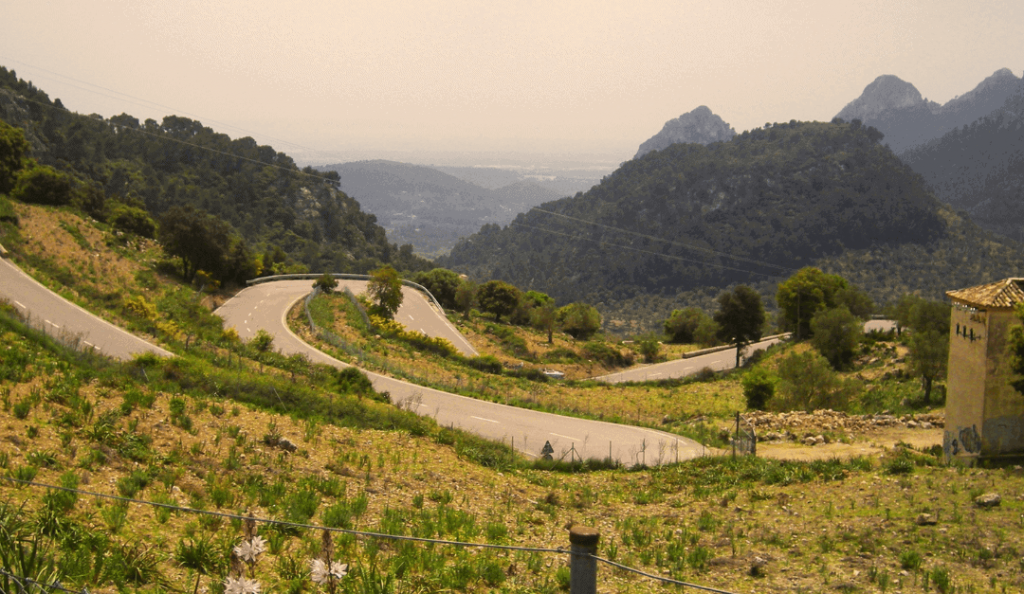
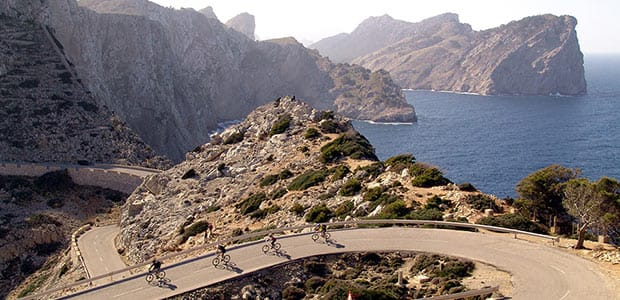
Cycling the Coll de Soller climb is a ride that infatuates so many cyclists who flock to Mallorca. The southern ascent which is the shorter than the north offers 20 tight bends while the north side has almost 30 hairpins to contend with. The northern ascent can also be ridden straight from Port Soller giving you another 4km of climbing. It is not only a feat of engineering in the heart of the Tramuntana mountains, but a piece of cycling art, whichever side you choose to ride from.

Sa Calobra: A challenging climb with breathtaking views.


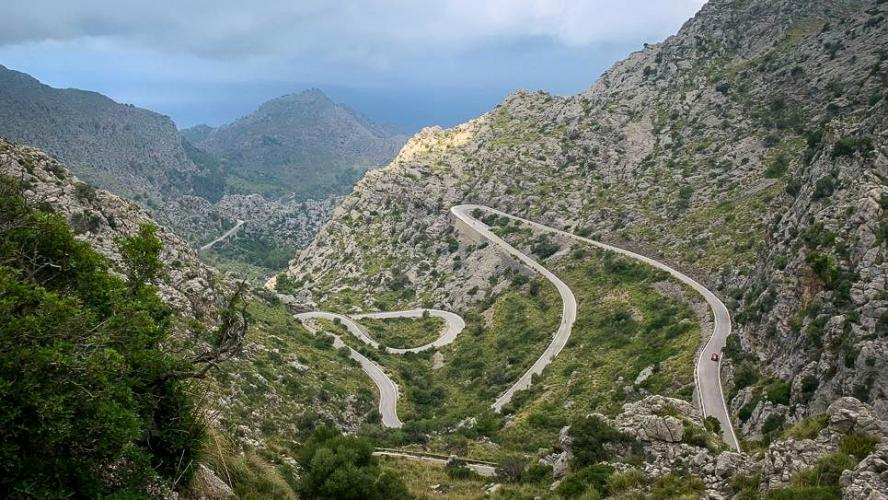
    The Sa Calobra climb is Mallorca’s most famous, spectacular and, arguably, toughest cycling climb.

    Sheer limestone cliff faces reach down to the turquoise sea. Weaving through the craggy lunar landscape, a feat of engineering and a work of art: a looping grey squiggle of silver tarmac that entices cyclists from across the globe.

    The Sa Calobra road balances beauty with brawn. It’s one of the most picturesque routes in Europe, but it demands serious mental toughness since you have to ride all the way down it before you ride up it. Once you’re at the hamlet by the sea, there’s no alternative to the long climb back up (unless you catch a boat or hitch a lift…).

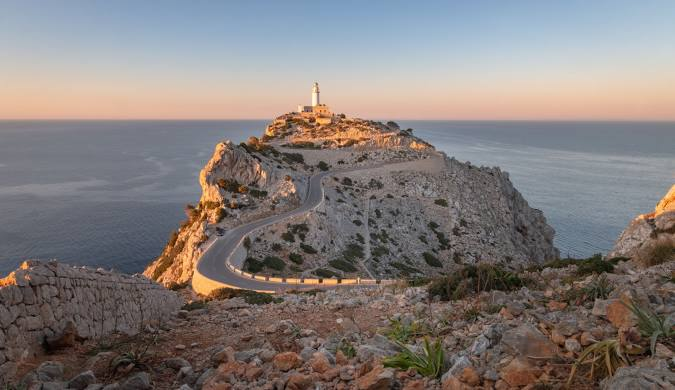
    Cap de Formentor: Ride to the northernmost point of the island for stunning vistas

    We think the Cap de Formentor lighthouse ride might indeed be Mallorca’s finest – especially now there are restrictions on cars and buses.

    Formentor Mallorca is not an easy ride. At 35km long, it includes nearly 1,000m of climbing – but it combines this with dreamy views, impressive engineering, and near perfect tarmac. Sa Calobra may be the most famous ride on Mallorca, and Andratx to Pollenca may be (one of) the most challenging, but we think the Mallorca lighthouse ride has the most unforgettable scenery of all.

    Coastal Roads: Explore the coastal roads for picturesque views of the Mediterranean.

    The 110 km Tramuntana west coast road runs from Pollensa in the north to Andratx in the south and is arguably the most spectacular on Mallorca. This route climbs 2,520 metres taking you over Coll de Femenia, Puig Major (the highest point on Mallorca), Can Costa, Cap des Bosquet, es Grau, Coll de sa Gramola and finishing in the town of Andratx. Puig Major, the highest road on Mallorca, is 13.7 km with an 818-metre elevation and an average gradient of 6%.

    One-bag packing hacks to change the way you travel

    by Jacks Flight Club

    If you’ve ever tried flying anywhere on a budget, you’ve no doubt run into low-cost airlines like Ryanair, Wizz Air or easyJet. With fares that are often dirt-cheap, it’s hard not to be lured in…

    But when it comes to actually booking your flight, you quickly find out that these prices come with seemingly endless additional fees for things we used to take for granted. Sitting with your travel companions, having a drink (even water!), and—their top moneymaker—bringing a regular-sized cabin bag onboard can apparently be classified as true luxury these days.

    That’s where so-called “one bag travel” comes in. More than just a logical way of being tight-fisted and sticking it to the man by refusing to pay up, it’s become a whole way of life with a passionate online community. In fact, many travellers prefer the one-bag life, even when they don’t have to pay extra for a checked bag

    how on earth are you meant to pack for anything longer than just a couple of days using only a “personal item”?

    The community of minimalist packers over on One Bag Travel has most of the answers you could possibly want.

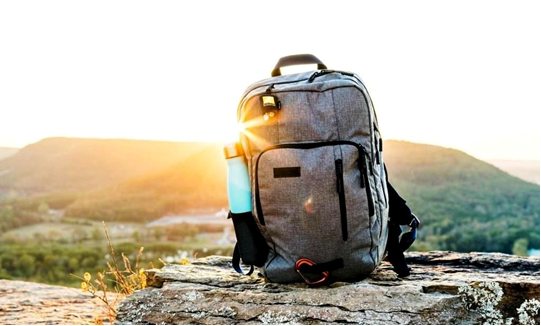
    Their example packing lists for different lengths of trip and destination are good for inspiration, but it’s the Carry-On Travel Backpacks section that is worth its weight in gold (or would be, if it weighed anything). It’s basically a comprehensive database of backpacks suitable for use on different airlines, including dimensions, capacity, user reviews and links straight to Amazon.

    Rummaging around the site, I also spotted an ‘ Ultimate Guide to Packing for Carry-On Only Travel’. There are lots of handy pointers there to get you thinking practically before you pack, especially when it comes to being selective about the clothes you bring. That said, I personally draw the line at the suggestion of only bringing one pair of underwear!

    Check out these budget items from Temu

    The single supplement—the bane of every solo traveller’s budget!

    For anyone who isn’t familiar, it’s a charge that anyone travelling alone may have come up against when booking hotels or cruises in particular—especially if the room you book is designed for multiple occupancy. To make up potential losses from one less person in a room, guests have traditionally been expected to pay extra on top of the standard rate.

    These days, hotels tend to be priced by the room regardless of how many people are occupying it. On top of that, it’s much more common to find single-occupancy rooms at lower prices. The same goes for cruises, with cabins designed for solo seafarers commonplace on newer ships.

    When it comes to booking tour packages, there are also quite a few operators that won’t charge you double for going it alone. In fact, there are now so many companies that specialise in running tours for solo travellers that we would likely be here all day if we tried to list them.

    That said, getting a private room is not a given if you join a solo tour. As anyone who’s ever booked a hotel will know, the cost of a single-occupancy room is rarely half that of a double. Many operators keep costs down by pairing you up to share a twin room with another traveller, unless you choose to pay a little extra for a private room.

    Here are our top recommendations for tour operators that won’t charge you a hefty single supplement, if at all:

    • Intrepid Travel – More than half of travellers taking an Intrepid tour are going it alone, so you can decide whether to buddy up and share a room or pay a “small extra charge”. Trips range from exploring the streets of Budapest and Transylvanian castles to a gruelling trek to Everest Base Camp, and they run tours catering to various demographics and budgets.
    • G Adventures – Another one that receive rave reviews for their solo trips. They also work with the “modest additional fee” approach to private rooms for anyone who wants their own space. Around 40% of their guests are solo travellers, with ages anywhere from 20s-60+. They also offer tours for all kinds of travel styles, be it 18-35, wellness or a spot of luxury.
    • Flash Pack – Specialising in solo travel for those in their 30s-40s, 98% of Flashpackers join trips alone. They focus on once-in-a-lifetime experiences, so you can generally expect these trips to be a bit fancier and more expensive than other companies. They’re big into the social aspect of their tours, and take great care to pair travellers with a roommate they’ll mesh well with. Once again, single rooms are available upon request for an extra fee.
    • Jules Verne – Unlike the rest of the pack, JV negotiate special “No Single Supplement” dates on over half their group tours, where single travellers can actually get a room to themselves for no additional cost. They also run solo-only tours, so you can be sure you won’t be surrounded by couples or groups of friends who already know each other.
    • One Traveller – These trips cater exclusively to the mature solo traveller, with most travellers in their 50s-70s. All their trips prices are based on single-occupancy rooms with ensuite facilities, so you won’t have to worry about sharing at all. They’re based in the UK, but offer trips all over the world.

    It is also worth checking out: https://solotravelerworld.com/solo-travel-deals/

    India’s Golden Triangle

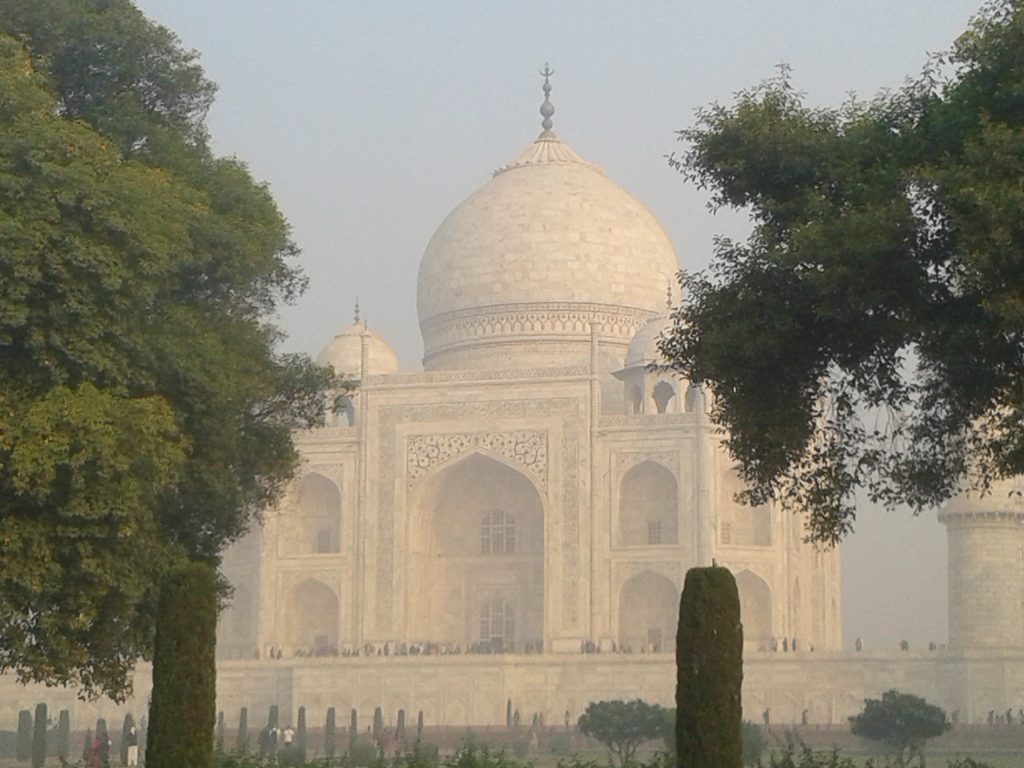
    The Taj Mahal is near the top of every traveller’s list as one of the New 7 Wonders of the World, but it’s only one of the amazing sites of India’s “Golden Triangle”.

    The established tourist route includes the home of the Taj Mahal, Agra, the city of Jaipur, and the country’s capital, New Delhi. Convenient air connections mean most people begin their trip in Delhi

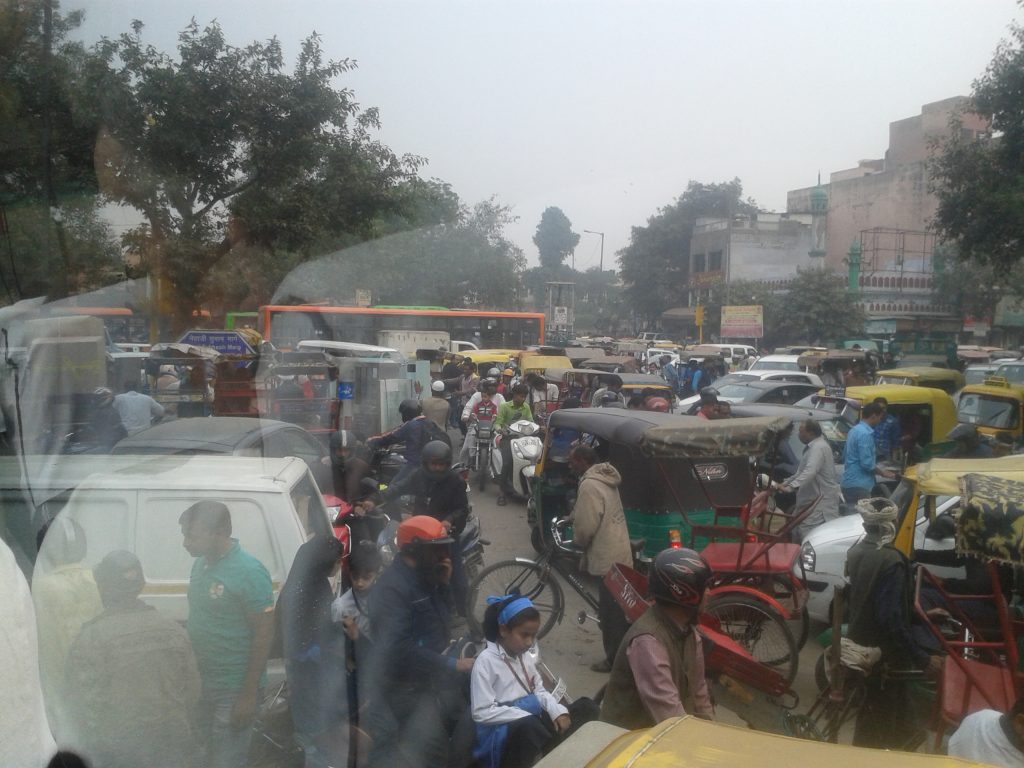
    Old Delhi is full of chaotic energy, where livestock, vehicles, and street food vendors all weave frantically between one another. It’s an assault on your senses that you have to experience at least once.

    On now to Agra, and the thing we’ve all been waiting for—the Taj Mahal. You can absolutely do it under your own steam, but to get the most out of your visit, members recommend hiring one of the government-certified guides waiting outside or booking a private tour.

    Once again, visiting early tends to be the best way to avoid huge crowds, although sunrise is a popular time to get the classic Taj picture. Don’t try to wait for a moment without other people in the background, that time is unlikely to come!

    If you have more time, the gardens (and wildlife) surrounding the intricately designed Tomb of I’timad-ud-Daulah (aka the Baby Taj) are a dreamy spot to explore. Agra’s own Red Fort is another great example of Mughal architecture, even better preserved and more accessible than its namesake in Delhi.

    Around 25 miles from Agra, the fortified ancient city of Fatehpur Sikri is often missed off tight schedules. It’s easy to spend a day here, soaking in the grandeur of the palace buildings, mosque and pavilions, which were designed as the first permanent Mughal settlement.

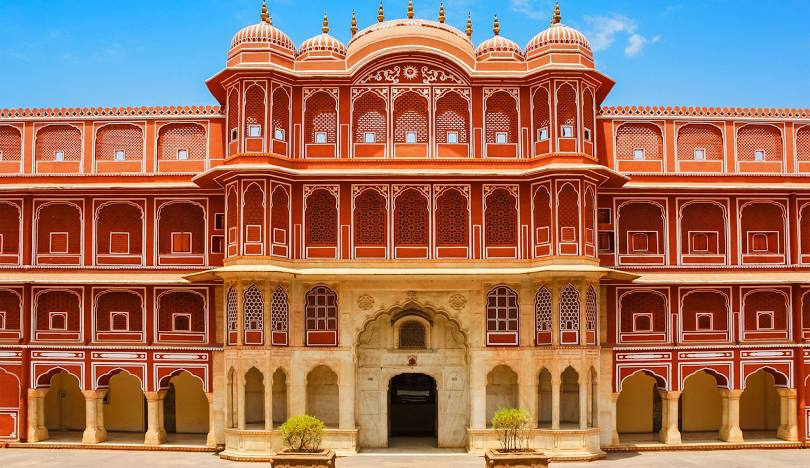
    For those who’ve had enough of the red sandstone, it’s on to Jaipur, which is called the “Pink City” due to the colour of the buildings.

    While Jaipur may not be as hectic as Delhi on the whole, it’s still a very busy place, so allow yourself a couple of days there. As well as the essential visit to the Amber Fort make time to see the Patrika Gate, and its daily musical fountain show, and the iconic Hawa Mahal palace.

    You can spend hours just photographing the colourful buildings as you walk onwards to the City Palace and make sure you include Nahargarh Fort at the end of the day for sunset views over the city.

    Zion National Park

    By Olivia from Jack’s flight club

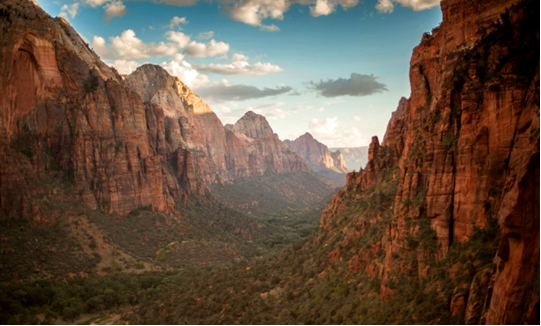
    Zion is the 3rd most visited National Park in the US, but only the 36th largest, and most of that land is wilderness that tourists can’t easily access. The main canyon area is a patch of lush, overgrown oasis between soaring tall peaks of red rock, surrounded by desert. This combination of tight space and popularity means that this skinny strip of Eden is pretty bogged down by crowds.

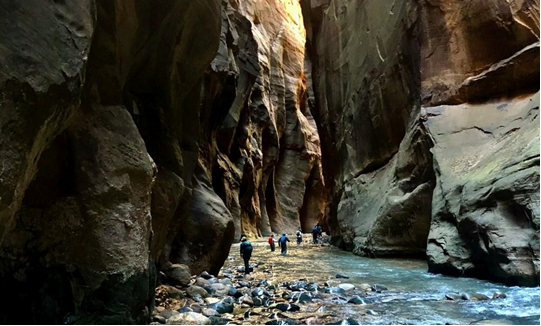
    But if you want to get away from the noise, there’s an option — trek deeper down the Virgin River to where Zion Canyon narrows into a slot, aptly named “the Narrows.” While still considered a popular hike, the deep, ice-cold water and miles of boulders are enough to scare off the bulk of the tourist crowd. A couple miles in, and you might feel like you have the park nearly to yourself.

    Here’s what is is actually like to hike the Narrows. if you are not accustomed to this sort of thing it can be a pretty difficult journey.

    You won’t make it very far into the canyon without gear, so unless you already own the tools for river hiking, your first stop will be the rental shop. The most popular rental shop seems to be Zion Outfitter, since they’re right by the park entrance. I instead went with Zion Adventures (a few minutes from the entrance in the town of Springdale) for the more flexible pick-up time. This worked out nicely, because without the giant crowd that always surrounds the more popular shop, I was able to talk to the employees and work out my route.

    They provided me with a walking stick, neoprene socks, water shoes, and dry pants with a bib. All of these items are 100% necessary if you want to make it in and out of the canyon without tripping, freezing, drowning, or generally having a miserable time. It was $60 for a day rental, which is around average compared to other shops.

    Next you must find your way to the Temple of Sinawava. While the name sounds grand, it’s really just the end of the drivable path through the canyon. It’s around here where the canyon begins to narrow and the smooth rock walls close in tighter. The sandy riverbanks start to shrink and eventually disappear, until the only path through the canyon is the river itself. Get to this spot, and you can begin your adventure.

    The scenic drive out to the Temple is only accessible via park shuttle for most of the year. I parked at the history museum, so I had to shuttle back to the visitor’s center, get off, wait in line, and then shuttle all the way to the Temple. From my arrival in Springdale to my arrival at the trailhead, two hours had gone by.

    When you get off the shuttle at the Temple, you won’t see much. Just more trees and another view of the creek. But continue down the paved path called the Riverwalk, and you’ll find the edge of the water. The canyon walls that seem distant in the rest of the park start to form a passageway—this is the mouth of the Narrows. It’s also your cue to get wet.

    The first few steps in the river feel strange as the water soaks into your neoprene socks. It’s chilly in the canyon, with your legs in icy water and minimal sunlight reaching your head. The temperature seems to drop dozens of degrees almost immediately. It feels less like starting a hike and more like entering some sort of massive and drafty stone building.

    Soon, the trail weeds out those who aren’t prepared – right before Mystery Falls, a trickle that splays out over the right-hand cliff. This is where the water is deepest, and the reason why dry packs are recommended. The river here came up to my chest.

    While the earlier part of the trail was alive with chit-chat, everyone in this section was silent and focused, fighting the current and trying not to trip. This bit only lasted about 25 yards. From here the path was much easier, and the water never reached my waist again.

    The further you go, the more the crowd thins out, and the more you feel like you’re in an alien landscape. The cliffs gradually become higher and narrower, and you have to look straight up to see the tops of them. In some spots, the river was clean enough to look crystal blue. In others, it takes on the trademark Utah redness. Maidenhair ferns peek out from rocks and feed on the drippy dampness at the bottom of the canyon.

    After about two hours, I decided to head back to the entrance, I’d heard that the return trip was faster because you’re going with the current instead of against, and that was my experience too. It only took about an hour and fifteen minutes to get back.

    It felt lightning fast, like a blink. Stepping back onto dry land and out of the damp corridor feels like crash-landing back on Earth.

    Recommended top activities

    Cruising through the Panama canal

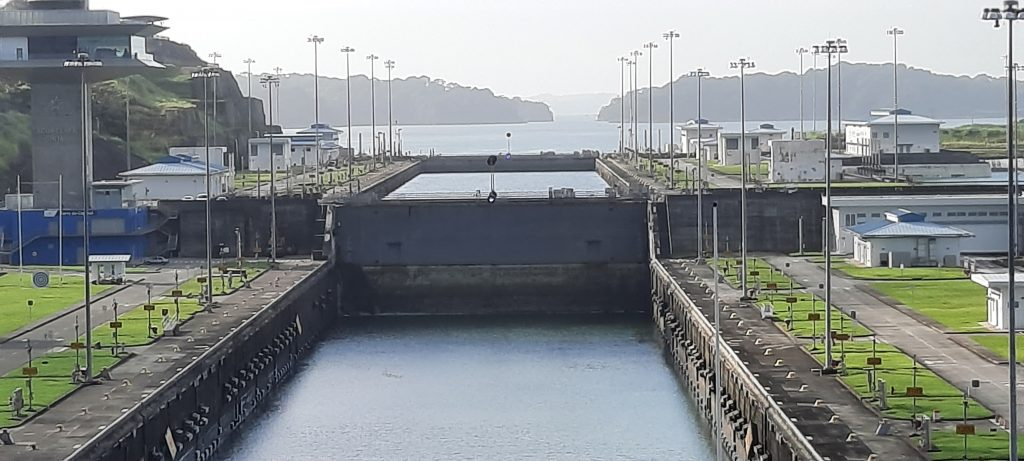
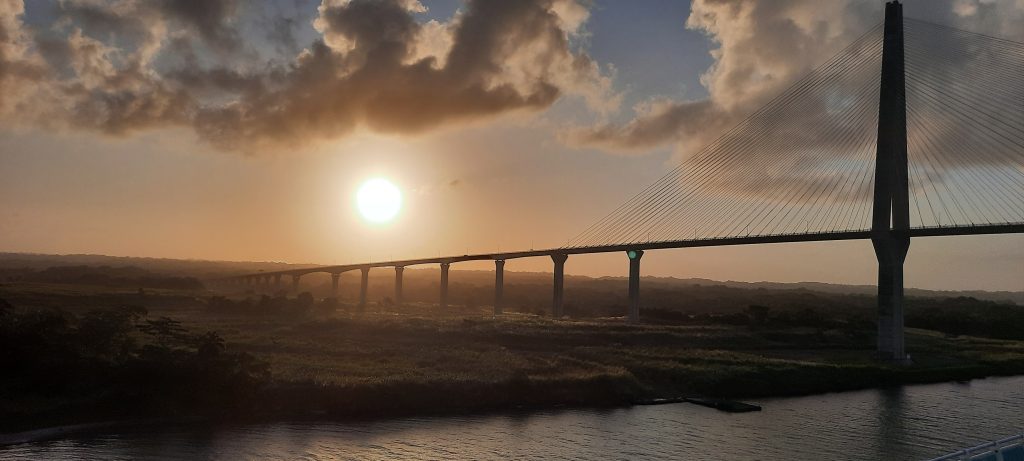
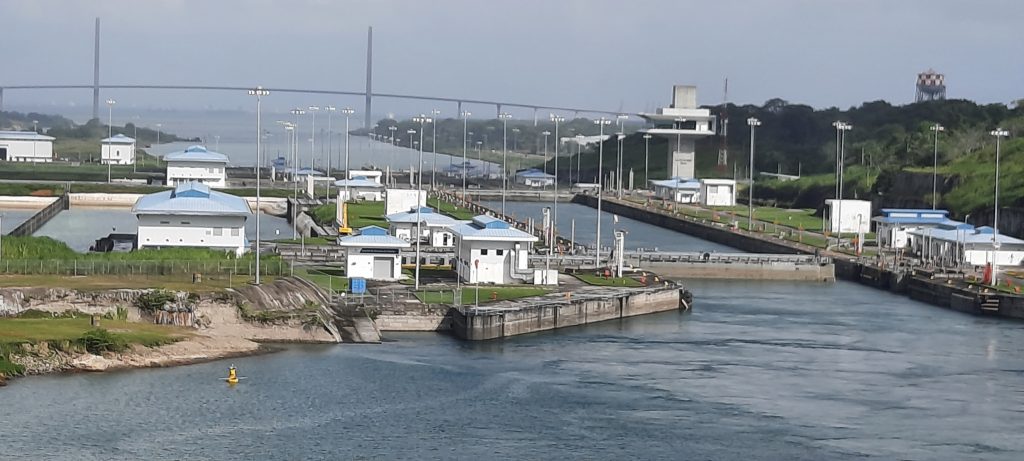
    Although the original Panama canal was completed in 1914, in 2016 the expansion project was completed. This added 2 new sets of locks, one each on the Atlantic and Pacific sides which doubled the canal’s capacity and allows larger vessels to pass. The ship I was on would not have been able to get through the original locks but we were able to transit the new Agua Clara 3-step locks. At dawn we cruised under the new Atlantic bridge which was built in 2019 to make a 3rd crossing over the canal.

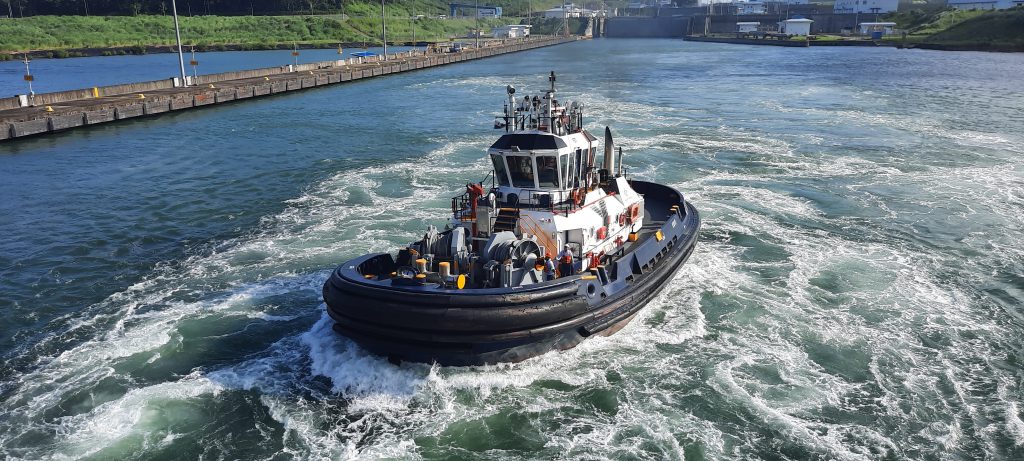
    Shortly after the bridge the canal separates, the new canal to the left and the old one to the right. Approaching the locks we are greeted by 2 tug boats to guide us through, one in front and one behind. A pilot also needs to come aboard our cruise ship to navigate us through the 3 new locks. This takes about 2 hours until we pass the visitor observation point and enter the Gatun lake.

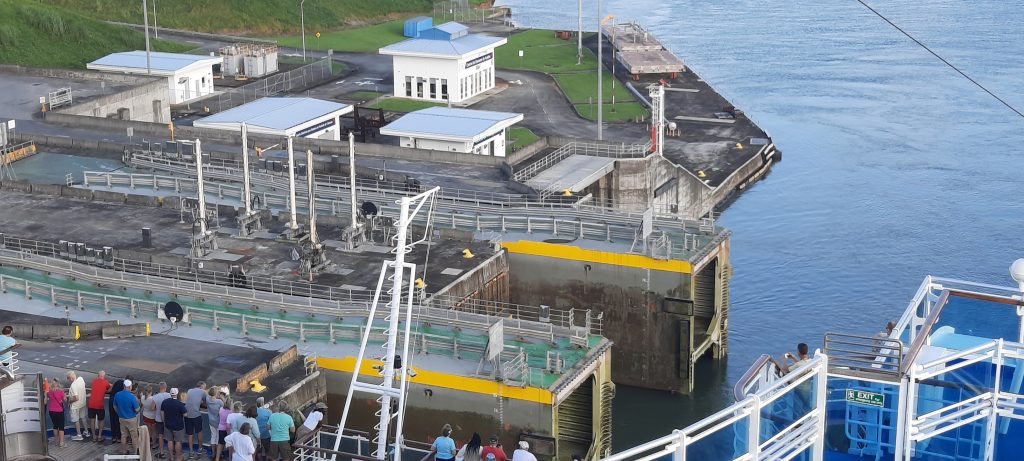
    The new locks are built with sliding gates and each lock has 3 water saving basins to reduce the volume of water that is needed from lake Gatun for lock operation. The operation of the new locks uses gravity and valves. There is no pumping involved. It was an amazing experience to watch the opening and closing of the gates.

    Our cruise was staying on the Atlantic (north) side of the canal which meant that we were only going as far as Gatun lake before turning to go back through the same 3 locks. Once we had passed through the 3rd lock into Gatun lake, we stayed there for about another 2 hours while some of the passengers left the ship in tenders to go on various excursions.

    The length of time in Gatun lake depends on how many other ships are coming through the canal as we needed to wait for them before going back through. Once back through the 3 locks we docked at Port Cristobel to collect the passengers who had been on excursions.

    Oktoberfest

    Oktoberfest is a celebration of all things beer and Bavaria, its origins date back to 1810 and a royal wedding between Crown Prince Ludwig and Princess Therese of Saxe-Hildburghausen. The meadow in front of Munich’s city gates was named Theresienwiese in her honour, and it remains at the epicentre of all the Oktoberfest.

    The Bavarian charm has spread far and wide, however, and most of us can enjoy a special Oktoberfest Mass or two without even hopping on a plane. But that’s no fun, really. So we say, why not mix it up a little and visit one of the world’s other great Oktoberfests instead?

    Blumenau, Brazil
    The (joint) second-largest Oktoberfest in the world is held in the Brazilian city of Blumenau. Having been founded in 1852 by German colonists, the city’s heritage is still clear to see in its architecture, restaurants and—you guessed it— beer. The area is frothing over with exceptional breweries, so you might need to work on your bar crawling stamina in advance.

    Festivities at the 19-day event serve up everything you could hope for, with Lederhosen, beer tents, parades and live music all on offer. Plus, there’s an added splash of Samba to spice things up. But it can also get slightly surreal at points. Just know that you’re not imagining things if you spot a giant herring named Rollmops presiding over a herring-eating competition.

    Blumenau will undoubtedly transport you right back to Munich, but no matter how much you like beer, you probably aren’t going all the way to Brazil just to drink a pint.

    Right on its doorstep is the Spitzkopf Ecological Park, where you can sweat off the hangover with a hike along rainforest trails towards panoramic views, before a refreshing dip in a river or waterfall. Keep your eyes peeled for protected species, like the white-bearded antshrike, white-necked hawk, cougar and margay.

    Kitchener-Waterloo, Canada
    Also in the running for second place after Munich is the Kitchener-Waterloo Oktoberfest in Ontario, Canada. This is another area with deep German roots, having been settled by German Mennonite farming families from the early 1790s. In fact, until a referendum in 1916, Kitchener was actually called Berlin.

    Known as the Twin Cities, Kitchener and Waterloo both take Oktoberfest seriously. What started out as a modest trial run in 1969 has become three weeks of partying, feasts, and family-friendly fun across the two cities.

    The official keg tapping is the ceremonial opening event, but it’s the Oktoberfest Thanksgiving Day Parade that really gets attention. The floats, marching bands and dancers make up the nation’s only Thanksgiving parade, drawing thousands come rain or shine.

    Chicago Architecture River Cruise

    Get views of Chicago’s most famous buildings, as well as insider info from an expert guide, on this architecture-focused cruise. See all the most important buildings on one tour, a hard-to-accomplish task on foot. View the skyline from the Chicago River while listening to live commentary. Snap photos of the Willis (Sears) Tower, Old Post Office, 360 Chicago Observation Deck, Wrigley Building, and more.

    Highlights

    from $50.36  per adult

    Lowest price guarantee Reserve now & pay later Free cancellation

    Duration: 1h 15m

    Start time: Check availability

    Japan in 2024

    If you are thinking of visiting Japan in 2024 there are a couple of extra-special events in the calendar.

    Our trip to the Sapporo Snow Festival returns, with departures in February ’24. Visit this fascinating festival to marvel at enormous snow and ice sculptures in the shape of cute characters, ice caves and architectural landmarks. Combine this with bullet train journeys through wintery landscapes and an ice-breaker cruise for a unique take on Japan – a great way to experience Japanese culture for the first time, or for an alternative view if you’ve already seen Japan in the warmer seasons.

    Or, if springtime is more your season, did you know Japan is famous for its cherry blossom? In 2024 the blossom trail is expected to start from mid-March and run until early April. Join one of our bestselling Japan trips at this to be treated with a spectacle for the eyes, with landscapes blooming in pink and white as you explore this fascinating country.